
Experience #46: Pha Taem National Park Cliff Paintings
Ancient cliff paintings dating back thousands of years. Pha Taem offers stunning views and archaeological significance.
Prehistoric Echoes: A Guide to Pha Taem National Park and Sustainable Heritage Travel in Ubon Ratchathani
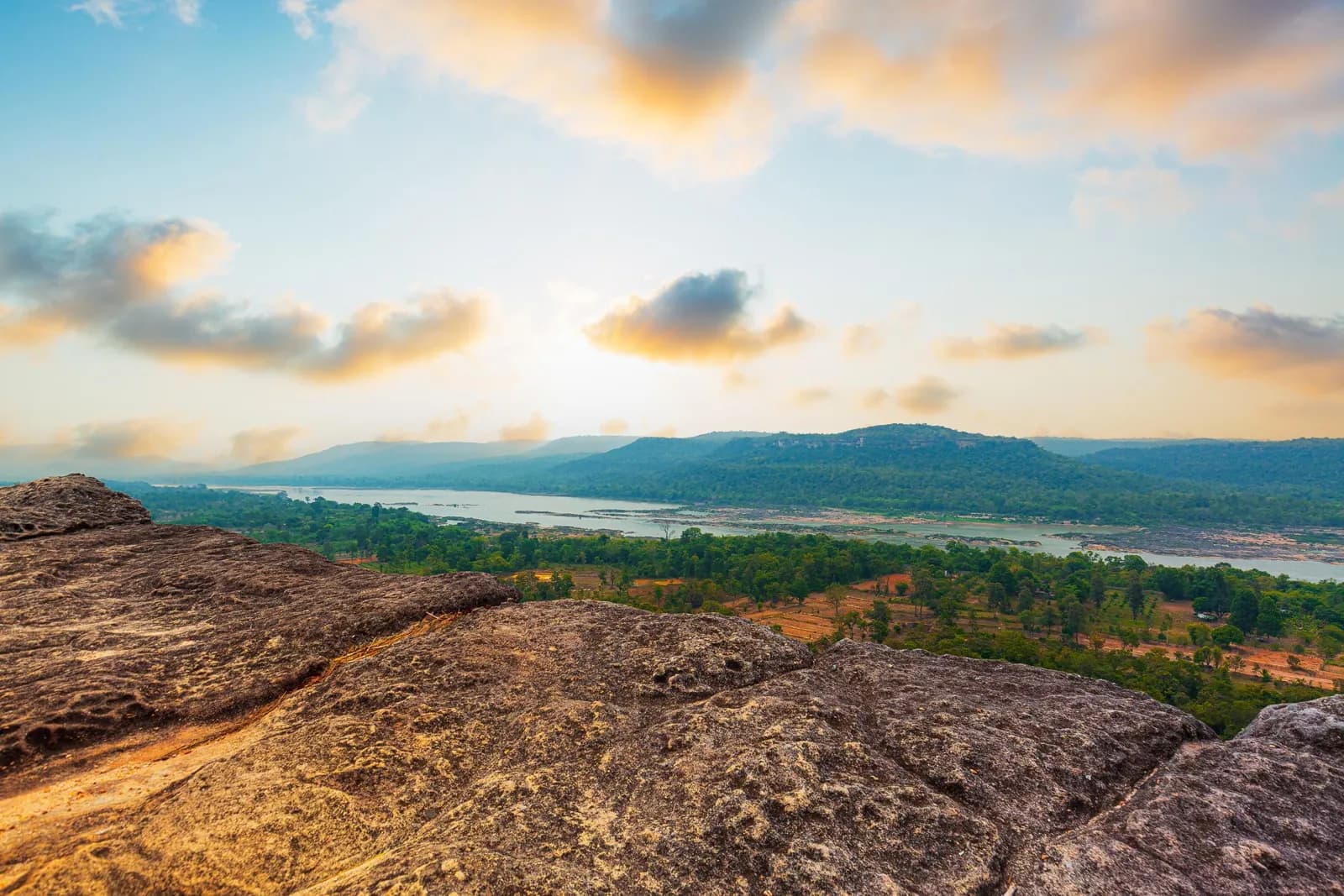
Perched on the high sandstone cliffs overlooking the Mekong River and the border with Laos, Pha Taem National Park is home to one of the world’s most significant collections of prehistoric rock art. Featuring 3,000-year-old cliff paintings, the park is a masterpiece of early human creativity and environmental adaptation. Engaging with sustainable heritage travel in Ubon Ratchathani through a visit to Pha Taem is more than a hike; it is an act of supporting a “Value over Volume” approach to cultural preservation. By choosing to walk these ancient trails, you are ensuring that Thailand’s “prehistoric canvas” is protected for future generations.
I remember standing on the edge of the Pha Taem cliff just as the sun broke over the Mekong. In Isan, they say this is the first place in Thailand to see the sunrise, and the light hits the ancient red ochre paintings with a glow that makes them look fresh, as if the artist had just stepped away. A local park ranger, Khun Somchai, shared that the paintings—depicting giant catfish, elephants, and human figures—aren’t just art; they are a 3,000-year-old message about the abundance of the river. In my fifteen years of reporting on heritage, Pha Taem remains the most poetic connection between our modern world and the prehistoric spirit of the Mekong.
Why Pha Taem Should Be on Your List Right Now
As Thailand implements its Thailand Tourism Next 2026 strategy, the focus has shifted toward “Fascinating Experiences” and the preservation of regional identity. Ubon Ratchathani is the anchor for this movement in the deep East, successfully rebranding as a destination for high-value cultural depth and natural wonders.
Pha Taem is the lighthouse for this movement. Under the national “7 Greens” standard, the park has become a benchmark for “Green Learning” and “Green Community”. By visiting now, you are participating in a model that ensures tourism revenue supports the local “Smart Patrol” teams who protect the rock art from environmental degradation and human interference. This is “Value over Volume” at its most impactful—where the success of your trip is measured by the quality of the insight and the preservation of the asset.
Best Time to Visit & Practical Planning Tips
- When to Go: The best time for sustainable travel in Ubon Ratchathani is from November to February. The skies are clear for the sunrise, and the “mist on the Mekong” is at its most dramatic.
- Avoiding the Heat: The cliff trail is exposed. Aim to arrive at the visitor center by 06:00 AM to catch the first light and finish your hike before the midday sun hits the sandstone.
- Getting There: The park is about 1.5 hours from Ubon Ratchathani city. For a sustainable arrival, use the “Green Logistics” shared van service from the city terminal or book an electric shuttle via the Tour in Thailand platform.
- Sample Daily Budgets:
Top 5 Must-Experience Highlights at Pha Taem
1. The 3,000-Year-Old Cliff Paintings
Walk the 4-kilometer loop trail to see the massive panels of rock art. You’ll see the “Giant Catfish” (Pla Buek) and the “Geometric Patterns” that illustrate the prehistoric life of the Mekong basin—a masterclass in “Nature-Based Learning”.
2. Sunrise at the “First Light” Viewpoint
Witness the sunrise over the Mekong River and the mountains of Laos. It is a “Must See” moment that honors the “Soft Power” of Thailand’s natural geography.
3. Sao Chaliang (Mushroom Rocks)
Explore the unique geological formations of giant sandstone rocks that look like prehistoric mushrooms. It’s a prime spot for “Forest Bathing” and understanding the erosion history of the Khorat Plateau.
4. Soi Sawan Waterfall
A short drive within the park leads to a “Must See” waterfall surrounded by fields of wild flowers that bloom during the cool season. It is a sanctuary for biodiversity and a highlight of the “Life Economy”.
5. Traditional Weaving at Khong Chiam
After the park, visit the nearby town of Khong Chiam. You can see local weavers creating textiles using natural dyes from forest plants, supporting the local “Circular Economy”.
Detailed 2-Day “Mekong Prehistory” Itinerary
Day 1: The Canvas and the Current
- 06:00 AM: Sunrise at the Pha Taem viewpoint.
- 07:30 AM: 2-hour guided hike along the cliff painting trail.
- 10:00 AM: Visit Sao Chaliang to see the mushroom rocks.
- 12:30 PM: “Sustainable Gastronomy” lunch in Khong Chiam—try the grilled Mekong fish.
- 02:30 PM: Boat trip to see the “Two-Color River” where the Mun and Mekong meet.
- Cost: ~1,500 THB.
Day 2: The Forest and the Future
- 08:00 AM: Morning bird watching and nature hike to Soi Sawan Waterfall.
- 11:00 AM: Visit a local community center to see “Prehistoric Motif” textile weaving.
- 01:00 PM: Community Voting: Use the Tour in Thailand app to vote for the next youth heritage guide or forest patrol project.
- Cost: ~800 THB.
Where to Stay: Best Eco-Friendly & Authentic Accommodations
- Authentic Choice: Khong Chiam Riverside Homestays: Stay with a local family overlooking the Mekong. Your stay supports rural income distribution and ensures 100% economic retention.
- Mid-Range: Tohsang Heritage Khong Chiam: A boutique resort that reflects Isan’s architectural heritage and prioritizes zero-waste practices.
- Sustainable Luxury: Kiri Private Reserve (Regional Partner): While in the East, they offer exclusive heritage packages that support Ubon Ratchathani’s conservation efforts.
Food & Local Cuisine Guide: Tasting the Mekong
Eating in Ubon Ratchathani is a lesson in “Must Taste” regional biodiversity.
- Must-Try Dish: Pla Buek (Mekong Giant Catfish) from sustainable community sources. Look for the “Thailand Good Travel” mark on the restaurant door.
- The “Must Taste” Drink: Fresh juice from wild seasonal fruits like star-gooseberry or longan.
- Etiquette: In Khong Chiam, “slow food” is the standard. Don’t rush your meal; engage with the local cook about where the ingredients were foraged.
Sustainable & Responsible Travel Tips
- Hands-Off the Art: Never touch the paintings. The oils from your skin cause chemical reactions that destroy the ancient pigments.
- No Plastic in the Park: Pha Taem strictly enforces the “No Foam, No Plastic” ban. Bring a reusable bottle.
- Support the Fund: A portion of your tour booking via the platform goes to the Thailand Environmental Fund to support the “Pha Taem Rangers” project.
- Quiet Observation: Keep your voice low on the cliff trails to avoid disturbing the rare bird species that nest in the sandstone.
FAQ
How old are the paintings?
The rock art at Pha Taem is estimated to be approximately 3,000 to 4,000 years old, dating back to the late Neolithic or early Bronze Age. Is the hike difficult? The loop trail is about 4 kilometers and involves some steps and uneven terrain, but is generally considered “easy-to-moderate” for those with basic fitness. How do I know my visit is truly sustainable? Pha Taem is a partner of the Tour in Thailand project, providing traceable revenue ledgers and measurable impact on local conservation.
Conclusion: A Future Written in Stone
A visit to Pha Taem is an invitation to see the “Soft Power” of Thailand’s past as a guide to its future. By choosing this sustainable heritage travel in Ubon Ratchathani experience, you aren’t just a guest; you are a partner in the most successful rock art management model in Southeast Asia. You’ll leave the cliffs not just with photos, but with the peace of mind that comes from knowing your journey helped keep the “Prehistoric Pulse” of the Mekong beating.
Ready to see the first light? Book your Pha Taem experience today and cast your vote for local heritage preservation!