
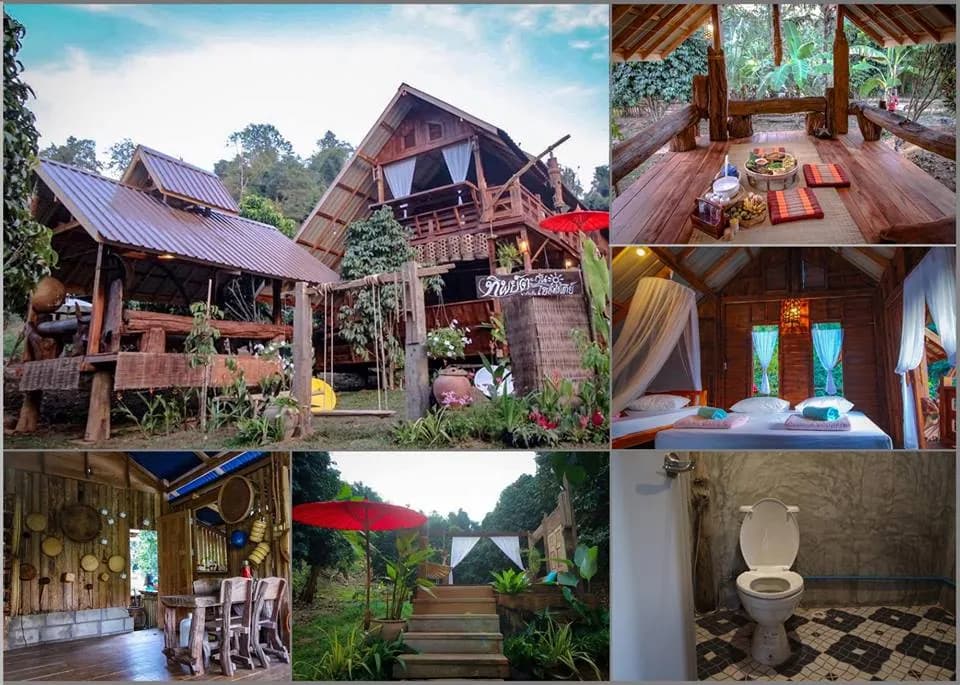
Experience #45: Ban Na Ton Chan Homestay (Sukhothai)
Homestay experience in Sukhothai. Connect with Thai family life and traditional homestay hospitality.
The Magic of Mud: A Guide to Ban Na Ton Chan and the Blueprint for Community-Based Tourism
A premier model of community-led tourism where guests stay in traditional wooden houses and participate in plant-based cloth dyeing. Ban Na Ton Chan has turned a simple ancestral technique of “mud-softening” textiles into a global success story that funds local forest protection and scholarships. Engaging with community-based tourism in Sukhothai through this village is an act of supporting a “Value over Volume” movement that ensures 100% of tourism dollars stay in the community. By choosing to live with the families of Ban Na Ton Chan, you are participating in a blueprint for how rural Thailand can thrive sustainably.
I remember my first day with Grandma Sa-ngiam, the village leader. She didn’t offer me a tour; she offered me a seat at her loom. “We don’t want you to just watch,” she said, showing me how to maneuver the foot pedals. “We want you to feel the mud and the cotton.” She explained that their unique mud-fermented cloth was born from observing that the mud stains on their farming sarongs made the fabric soft and durable . In fifteen years of reporting on social enterprises, Ban Na Ton Chan remains the gold standard because it hasn’t changed its character despite its success—it is a community that owns its own future .
Why Ban Na Ton Chan Should Be on Your List Right Now
As Thailand moves through 2026, the “Thailand Tourism Next” strategy has identified Ban Na Ton Chan as a “Must Seek” destination and a benchmark for “Green Community” standards . The village is a case study for the Bio-Circular-Green (BCG) Economy Model .
By visiting now, you are participating in a model where a significant portion of your booking fee is allocated to a community fund used for youth education and environmental conservation . As conscious travelers increasingly prioritize “soul-satisfying escapes” over “overtourism hotspots,” Ban Na Ton Chan offers a way to experience the spiritual heart of the North without the environmental footprint of heavy transport.
Best Time to Visit & Practical Planning Tips
- Weather & Seasons: The “Cool Season” (November to February) is spectactular for the sunrise mist at the Huai Ton Hai viewpoint. The “Green Season” (June to October) is when the orchards are overflowing with durian and mangosteen.
- The Weekday Factor: To experience the true village rhythm without the weekend rush of domestic tourists, visit on a Tuesday or Wednesday .
- Getting There: The village is 1.5 hours from Sukhothai city. For a sustainable arrival, use a private electric vehicle or take a shared bus to Si Satchanalai and arrange a village pickup .
- Sample Daily Budgets:
Top 5 Must-Experience Highlights in Ban Na Ton Chan
1. Mud-Fermented Cloth Workshop
Learn the “Magic of Mud.” You’ll dunk hand-woven cotton into local river mud to ferment overnight, resulting in the softest fabric you’ve ever touched—a “Must Buy” sustainable textile .
2. Huai Ton Hai Viewpoint Trek
Hike 800 meters at dawn to watch the sunrise over the sea of mist. Your guide will serve you hot coffee in a bamboo tube—a serene connection with nature .
3. The “Bar-Hon” Doll Workshop
Watch the artisans create the famous “gymnast” wooden dolls, a traditional craft that supports the village’s elderly residents. They make for a perfect, ethical “Must Buy” souvenir .
4. Khao Poep (Phra Ruang Noodles)
Try the town’s signature dish, inspired by a grandmother’s craving 50 years ago. It features steamed rice flour folded over vegetables and eggs—a “Must Taste” culinary legacy .
5. Community “Sanuk” Bicycle Tour
Rent a bike and cycle through the rice paddies and orchards. You’ll stop at local homes to see the “Life Economy” in action—from organic salt boiling to fruit harvesting.
Detailed 2-Day “Blueprint of Success” Itinerary
Day 1: The Craft and the Clay
- 09:30 AM: Arrive at the community center; welcome drink of fresh lime and honey.
- 10:30 AM: Participatory mud-fermenting and weaving workshop .
- 12:30 PM: “Must Taste” lunch of Khao Poep at the village eatery .
- 02:30 PM: Bicycle tour to the “Bar-Hon” doll workshop and fruit orchards .
- 06:30 PM: Traditional northern dinner with your host family.
- Cost: ~1,800 THB.
Day 2: The Mist and the Merit
- 05:00 AM: Trek to Huai Ton Hai for sunrise and bamboo coffee .
- 08:00 AM: Breakfast and morning alms offering in front of the house .
- 10:00 AM: Visit the village “Seedling Bank” to plant a native tree as part of reforestation .
- 01:00 PM: Community Voting: Use the Tour in Thailand app to vote for the next village scholarship or forest patrol project.
- Cost: ~1,200 THB.
Where to Stay: Best Eco-Friendly & Authentic Accommodations
- Authentic Choice: Ban Na Ton Chan Homestay Group: Stay in one of 39 stilted wooden houses. Your stay supports the village committee and ensures fair income distribution .
- Mid-Range: Treehouse Homestay: A more modern take on the traditional design, offering comfort while staying 100% locally-owned and managed.
- Sustainable Base: Midtown Sukhothai: An SHA Plus certified hotel that supports regional heritage tours and minimizes plastic waste .
Food & Local Cuisine Guide: Tasting the Tradition
In Ban Na Ton Chan, every meal is a lesson in “Sustainable Gastronomy” .
- Must-Try Dish: Khao Poep. The thin rice flour sheet is steamed over a cloth-covered pot, an ancient technique that uses zero oil .
- Local Treat: Freshly picked durian or rambutan from the community’s organic orchards .
- Etiquette: Meals are served on low “Khantoke” tables. Always wait for the head of the household to take the first bite as a sign of respect.
Sustainable & Responsible Travel Tips
- Respect the Rules: Ban Na Ton Chan has a strict community charter. No noise after 21:30 and no littering in any public areas .
- Support the Makers: Buy your mud cloth directly from the co-op shop. This ensures that 100% of the value goes back to the artisans .
- No Plastic, No Exceptions: The village is a “Green Zone.” Carry a reusable bottle; the community center provides filtered water refills .
- Support the Fund: Every booking made via the platform includes a contribution to the Thailand Environmental Fund. Don’t forget to vote for projects that help preserve the village’s water source.
FAQ
How do I book a stay at Ban Na Ton Chan?
Bookings are best made via the Tour in Thailand platform or by contacting the village tourism manager, Ms. Mam, directly in advance .
Is it difficult to reach the viewpoint?
It is an 800-meter hike with some steep sections. A basic level of fitness is required, but local guides are there to assist you and provide bamboo walking sticks .
How much of my money goes to the village?
Under the Tour in Thailand model, 100% of the homestay revenue and over 70% of the tour fees stay within the village community enterprise .
Conclusion: A Blueprint for the Future
Choosing to stay at Ban Na Ton Chan is an act of supporting a Thailand that is finding its power in its roots. It is a way to say that the value of travel isn’t in what you see, but in who you help and what you learn. By wearing their mud-dyed cloth and trekking their mountains, you aren’t just a guest; you are a partner in the most successful community-based tourism model in the country. You’ll leave the village not just with a scarf, but with the inspiration that comes from knowing a better way to travel—and a better way to live—is possible.
Ready to touch the magic of mud? Book your Ban Na Ton Chan experience today and cast your vote for community empowerment!
Meta Description (150-160 characters)
Experience the best of Isan and Northern Thailand heritage. Explore Phimai, Phanom Rung, the Red Lotus Sea, and Ban Na Ton Chan homestay with our sustainable guide.
Optimized Title Tags
- Sustainable Heritage Travel Korat: Phimai Historical Park Guide
- Phanom Rung Historical Park: Buriram’s Volcanic Ancient Temple
- Red Lotus Sea Udon Thani: A Guide to Community Conservation 2026
- Chiang Khan Wooden Town: Responsible Slow Travel on the Mekong
- Ban Na Ton Chan Sukhothai: The Blueprint for Community-Based Tourism
- Best Cultural Experiences Isan: Top 5 Sustainable Hidden Gems
- Responsible Travel Thailand: Exploring Ancient Khmer & Lanna Wisdom