
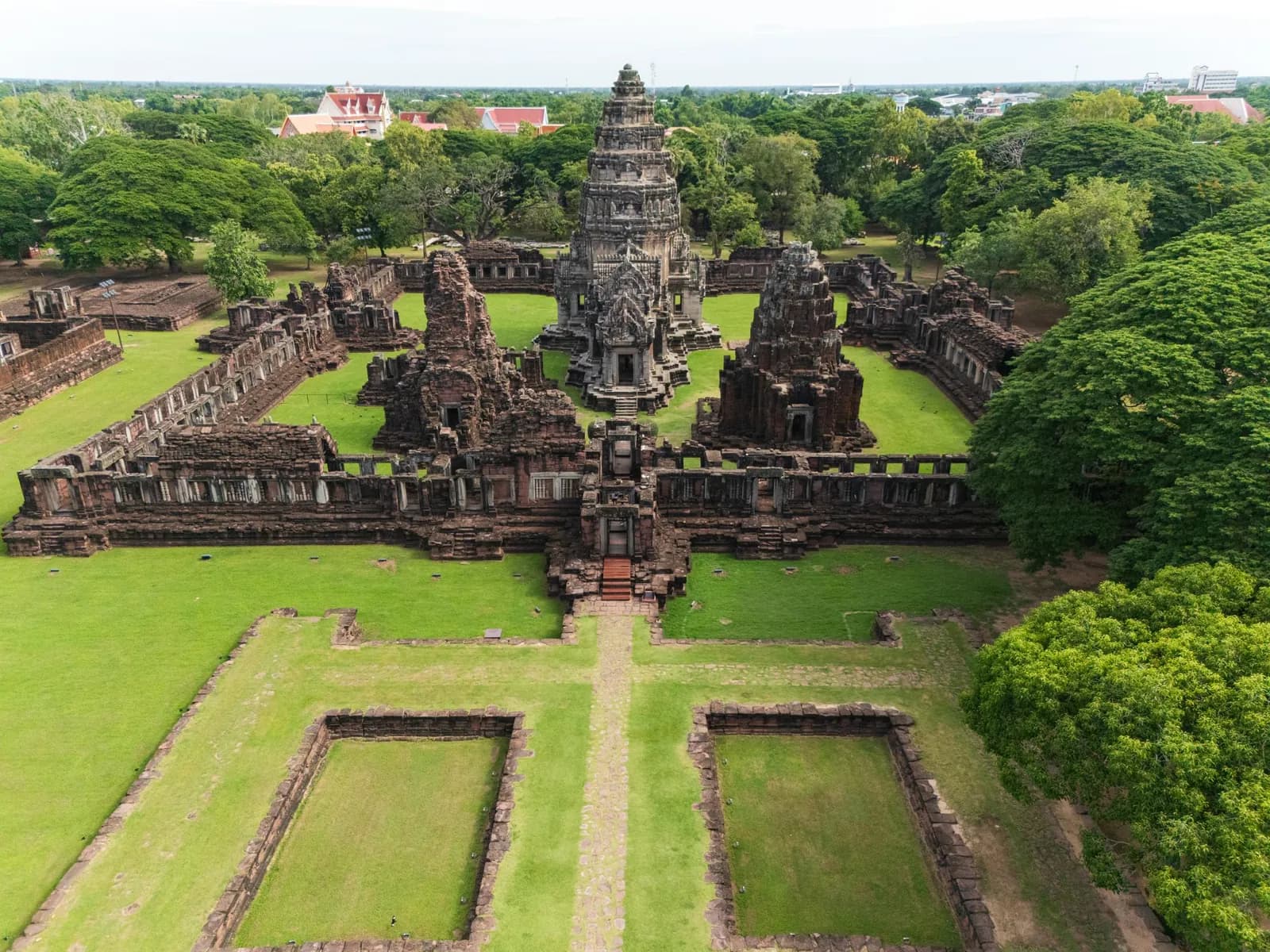
Experience #41: Phimai Historical Park (Nakhon Ratchasima)
Ancient Echoes: A Guide to Phimai Historical Park and Sustainable Heritage Travel in Korat Marking the end of the Ancient Khmer Highway, this 11th-century ruin is maintained through intensive local conservation efforts. Exploring on foot minimizes the structural impact on the delicate sandstone monuments. Engaging with sustainable heritage travel in Korat at Phimai is more […]
Ancient Echoes: A Guide to Phimai Historical Park and Sustainable Heritage Travel in Korat
Marking the end of the Ancient Khmer Highway, this 11th-century ruin is maintained through intensive local conservation efforts. Exploring on foot minimizes the structural impact on the delicate sandstone monuments. Engaging with sustainable heritage travel in Korat at Phimai is more than a history lesson; it is an act of supporting a “Value over Volume” approach to cultural preservation . By choosing to wander these sacred grounds responsibly, you are ensuring that the largest Khmer temple in Thailand remains standing for another millennium.
I remember my first walk across the bridge into Phimai. The sandstone glowed with a deep, orange hue under the afternoon sun, looking remarkably like a miniature Angkor Wat. A local guide, Khun Chai, shared that the town of Phimai was built around the temple, not the other way around. “We are the guardians of this stone,” he told me, pointing to the intricate carvings of Hindu deities. “If the stone crumbles, our history disappears.” In my years of documenting Southeast Asian ruins, Phimai stands out because of its seamless integration into the modern community—a living example of the Circular Economy of heritage .
Why Heritage Conservation Should Be on Your List Right Now
As Thailand implements its Action Plan 2026, the focus has shifted toward “Fascinating Experiences” and the preservation of intangible assets . Phimai is the anchor for this movement in the gateway to Isan. Under the national “7 Greens” standard, the park has become a benchmark for “Green Learning” and “Green Community” .
By visiting now, you are participating in a model of regenerative tourism that directly combats “tourism leakage”. The revenue from your entry fee and guided tours stays with the Fine Arts Department and local guide cooperatives, ensuring that the “Soft Power” of Khmer-Thai architecture is shared respectfully . As conscious travelers increasingly seek out “Must Seek” hidden gems that offer historical depth without the crowds, Phimai offers a way to experience the Angkorian era without the environmental footprint of heavy transport .
Best Time to Visit & Practical Planning Tips
- Weather & Seasons: The “Cool Season” (November to February) is ideal, with clear skies and manageable temperatures. The “Phimai Festival” in November features spectacular light-and-sound shows and traditional boat races.
- Avoiding the Heat: Aim to arrive at the gates by 09:00 AM. The sandstone can absorb and radiate heat, so mid-morning is the best window for photography and comfortable walking.
- Getting There: Phimai is about 1 hour from Nakhon Ratchasima city. For a sustainable arrival, use the “Green Logistics” shared van service from the Korat bus terminal or book an electric shuttle via the Tour in Thailand platform .
- Sample Daily Budgets:
Top 5 Must-Experience Highlights at Phimai
1. The Main Prang (Central Tower)
Admire the white sandstone tower, standing 28 meters tall. It is unique for its Mahayana Buddhist orientation, a departure from the typical Hindu alignment of other Khmer temples.
2. The Ancient Naga Bridge
Cross the cruciform bridge representing the connection between the human realm and the heavens. It is a masterclass in “Nature-Based Innovation” and ancient civil engineering.
3. Sai Ngam Banyan Tree Grove
A short bicycle ride away is Thailand’s largest banyan tree grove. This 350-year-old network of roots and branches covers over 1,300 square meters—a prime spot for “Forest Bathing” .
4. Phimai National Museum
Visit this educational hub to see the “Soft Power” of the region’s artifacts. It houses the original carvings and statues from the park, providing essential context for your walk.
5. Night Market Gastronomy
After the park closes, walk to the town square for the night market. Try the Phad Mee Korat, a “Must Taste” regional dish made with sun-dried rice noodles and local tamarind.
Detailed 2-Day “Gateway to Isan” Itinerary
Day 1: The Stone and the Spirit
- 09:00 AM: Arrive at Phimai Historical Park; 2-hour guided walking tour.
- 11:30 AM: Visit the Phimai National Museum to see the lintel carvings.
- 12:30 PM: Lunch at a “Zero Waste” community cafe—try the spicy Korat salad.
- 02:30 PM: Bicycle tour to Sai Ngam Banyan Grove for quiet reflection .
- 05:00 PM: Check into a local eco-resort.
- Cost: ~1,200 THB.
Day 2: The Living Heritage
- 08:00 AM: Morning alms-giving to monks at a community temple .
- 10:00 AM: Workshop on traditional weaving with a local village cooperative .
- 01:00 PM: Community Voting: Use the Tour in Thailand app to vote for the next restoration project in the Phimai district.
- Cost: ~800 THB.
Where to Stay: Best Eco-Friendly & Authentic Accommodations
- Authentic Choice: Phimai Homestays: Stay with a local family in a traditional wooden house. Your stay supports local hospitality training and ensures 100% economic retention.
- Mid-Range: Rabbit Cafe & Guesthouse: A boutique stay that prioritizes energy-efficient infrastructure and local sourcing for its menu.
- Sustainable Luxury: Kantary Hotel Korat (Regional Hub): An SHA Plus certified hotel that has implemented waste reduction strategies and supports regional conservation efforts .
Sustainable & Responsible Travel Tips
- Walk, Don’t Climb: Stay on the designated paths and never climb on the ruins. Sandstone is fragile and oils from human skin can accelerate erosion.
- No Plastic, No Problem: The park has a strict “No Foam, No Plastic” policy . Carry a reusable bottle; the visitor center provides water refills.
- Support the Fund: A portion of your entry and tour booking goes to the Thailand Environmental Fund. Don’t forget to vote on the platform for local heritage restoration.
- Dressing for Respect: This is a sacred site. Ensure your shoulders and knees are covered as a sign of respect for the culture .
Frequently Asked Questions (FAQ)
Is Phimai better than Ayutthaya?
Phimai offers a completely different architectural style (Angkorian) and is much less crowded, making it ideal for those seeking a more authentic, quiet experience.
Can I visit as a day trip from Bangkok?
It is a 4-hour drive each way. We recommend staying at least one night to enjoy the “Slow Travel” rhythm of the town and the banyan grove.
How do I know my visit is truly sustainable?
Phimai is a partner of the Tour in Thailand project, providing traceable revenue ledgers and measurable impact on local conservation .
Conclusion: Stones of Resilience
A visit to Phimai is an invitation to see the “Soft Power” of Thailand’s past as a bridge to a sustainable future. By choosing this sustainable heritage travel in Korat experience, you aren’t just a visitor; you are a partner in the most successful heritage management model in Isan. You’ll leave the ruins with the peace of mind that comes from knowing your journey helped keep the “Gateway to the North” standing tall.
Ready to walk through time? Book your Phimai experience today and cast your vote for local heritage preservation!