
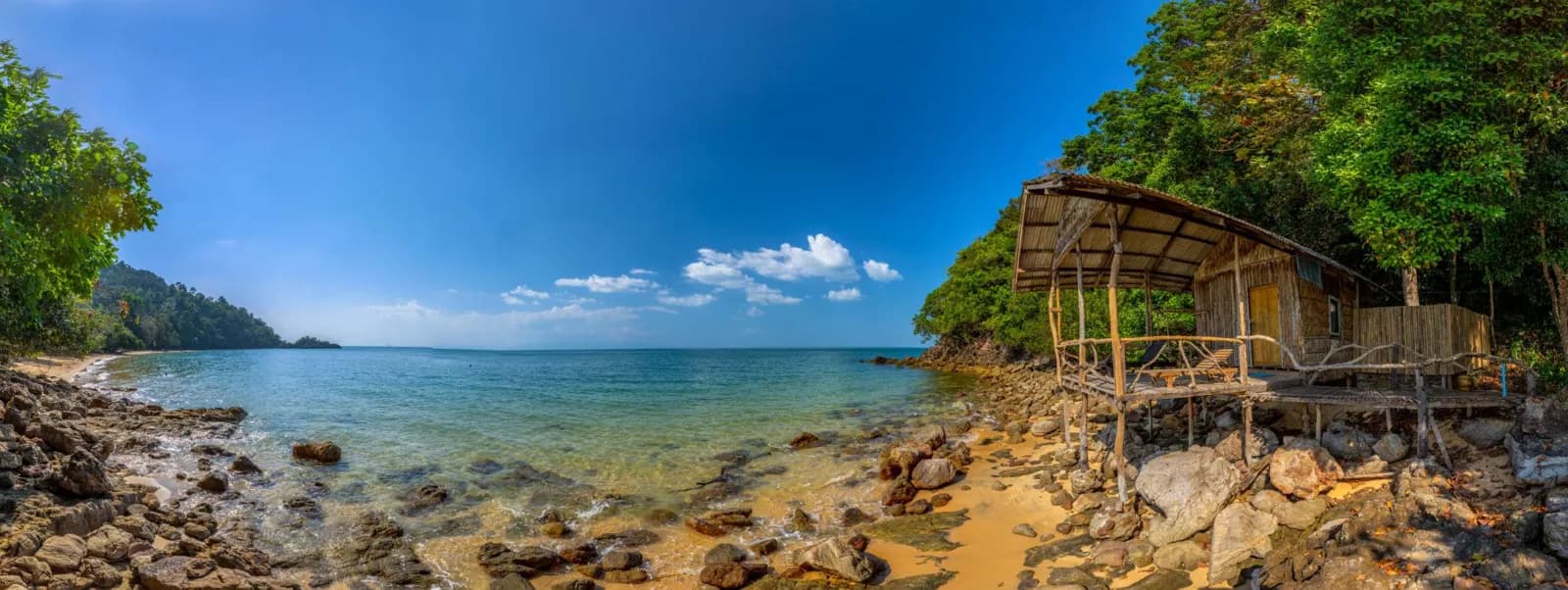
Experience #39: Koh Phayam Eco-Lodges (Ranong)
The Slow Island Soul: A Guide to Koh Phayam Eco-Lodges and Low-Impact Island Tourism Koh Phayam is often called the “Koh Samui of thirty years ago,” but as we move into 2026, it is forging a future that is entirely its own. Unlike the high-consumption resorts of the major hubs, this peaceful island embraces sustainability […]
The Slow Island Soul: A Guide to Koh Phayam Eco-Lodges and Low-Impact Island Tourism
Koh Phayam is often called the “Koh Samui of thirty years ago,” but as we move into 2026, it is forging a future that is entirely its own. Unlike the high-consumption resorts of the major hubs, this peaceful island embraces sustainability over mass tourism, offering a more thoughtful, eco-conscious way to experience its natural beauty. Engaging with low-impact island tourism on Koh Phayam through its off-grid eco-lodges is an act of supporting the “Circular Economy” where solar power, rainwater harvesting, and zero-waste kitchens are the norm, not the exception. Here, the bicycle is the primary mode of transport, and the rhythm of life is dictated by the sun and the sea.
I remember my first night at a Koh Phayam eco-lodge. The sound of the diesel generators that plague many Thai islands was absent, replaced by the soft rustle of the cashew trees and the rhythmic call of a hornbill. My host, Khun Aom, showed me the solar array that powers the entire guest wing. “On Koh Phayam, we don’t want to change the world,” she said with a smile. “We want to stay exactly as we are.” In my fifteen years of covering island development, Koh Phayam remains the most authentic example of “Urban Rewilding” in a maritime setting—a place where the boundary between “guest” and “nature” is blurred by a single night under the stars.
Why Low-Impact Tourism Should Be on Your List Right Now
As Thailand implements its Thailand Tourism Next 2026 framework, the focus has shifted toward “Zero Waste Islands” and “Fascinating Experiences” that promote regional income distribution. The goal is to move away from over-saturated hotspots and toward “Soul-Satisfying Escapes” like Koh Phayam.
The island is the lighthouse for this movement. Under the national “7 Greens” initiative, Koh Phayam has become a benchmark for “Green Community” and “Green Heart” principles. By visiting now, you are participating in a model of regenerative tourism that directly supports the “Circular Economy.” The revenue from your stay stays with the local families who manage the lodges, ensuring that the next generation sees the value in protecting the island’s biodiversity rather than selling it to large corporate investors . As conscious travelers increasingly seek out “Digital Detox” destinations, Koh Phayam offers the ultimate sanctuary for health and mindfulness.
Best Time to Visit & Practical Planning Tips
To enjoy the “Slow Life” without the monsoon rains, strategy is essential.
- When to Go: The best time for low-impact travel on Koh Phayam is from November to April. This is when the seas are calm and the cashew harvest is in full bloom. During the “Green Season” (May to October), many lodges close, but those that remain offer the ultimate “Slow Travel” experience for those who love the dramatic storms.
- Logistics: Reach Ranong via a 9-hour “Green Logistics” bus from Bangkok or a short flight. From the Ranong Pier, a 45-minute speedboat or a 2-hour slow ferry brings you to the island. Once there, rent a bicycle or an electric motorbike—cars are not allowed .
- Sample Daily Budgets:
Top 5 Must-Experience Highlights on Koh Phayam
1. Off-Grid Eco-Lodge Immersion
Stay in a lodge that utilizes 100% renewable energy and compost toilets. It’s a “Must Seek” example of how we can live comfortably while maintaining a minimal environmental footprint .
2. The “Cashew Trail” Cycling Tour
Pedal through the island’s interior to see the vast cashew nut plantations. You’ll learn about the “Circular Economy” of the harvest and taste the unique local varieties that are shipped all over Thailand.
3. Hornbill and Wildlife Trekking
Join a local guide for a walk into the central hills to spot the island’s famous hornbills and macaques. It is a masterclass in “Nature-Based Learning” and a prime spot for “Forest Bathing”.
4. Zero-Waste “Slow Food” Dining
Dine at a “Green Leaf” certified restaurant that sources 100% of its ingredients from the island’s organic gardens. Try the Cashew Nut Salad, a “Must Taste” regional specialty.
5. Sunset Reflection at Aow Yai
Experience the dramatic low tides of the “Big Bay.” Walk hundreds of meters out onto the sandbanks to watch the sun set over the Andaman—a serene connection with nature that honors the “Soft Power” of the island.
Detailed 3-Day “Slow Island” Itinerary
Day 1: The Arrival and the Solar Pulse
- 10:30 AM: Arrive at Koh Phayam pier; rent a bicycle for a carbon-neutral start.
- 11:30 AM: Check into your eco-lodge; welcome briefing on the solar power and water system.
- 12:30 PM: “Sustainable Gastronomy” lunch featuring organic cashew nuts.
- 03:00 PM: Bicycle tour to the “Spirit House” and the central cashew groves.
- 06:30 PM: Dinner by the sea with your host family.
- Cost: ~2,200 THB.
Day 2: The Forest and the Wings
- 07:00 AM: Sunrise bird-watching trek to spot the local hornbill populations.
- 10:00 AM: Participatory workshop on organic island gardening and composting.
- 12:30 PM: Picnic lunch at a hidden beach using biodegradable palm-leaf containers.
- 03:00 PM: Kayak session through the island’s southern mangroves to see the “Life Below Water” .
- Cost: ~1,500 THB.
Day 3: Impact and Integration
- 09:00 AM: Visit the island’s community center to learn about the “No Foam, No Plastic” initiatives.
- 11:30 AM: Community Voting: Use the Tour in Thailand app to vote for the next solar expansion or beach cleanup project funded by the Environmental Fund.
- Cost: ~800 THB.
Where to Stay: Best Eco-Friendly & Authentic Accommodations
- Luxury: Varana Hotel Krabi (Regional Strategic Partner): While in the south, they offer exclusive “Slow Island” packages that support Koh Phayam’s low-impact lodges .
- Mid-Range: The Sun Resort Koh Phayam: A pioneer in solar-powered hospitality with a strict zero-waste policy and a focus on local hiring.
- Budget Choice: Island Huts: Simple, clean wooden cabins on the beach that use natural ventilation and provide a truly authentic “Slow Travel” experience .
Food & Local Cuisine Guide: Tasting the Island
In Koh Phayam, every meal is a celebration of the cashew and the sea.
- Must-Try Dish: Som Tum Med Ma-muang (Papaya salad with roasted island cashews). Look for the “Thailand Good Travel” mark on the restaurant door.
- The “Must Taste” Drink: Cashew apple juice—tart, refreshing, and made from the often-discarded fruit of the nut harvest.
- Etiquette: Koh Phayam is a “Zero Waste” island. Always carry your own reusable bottle and avoid asking for straws or plastic bags .
Sustainable & Responsible Travel Tips
- Conserve the Current: Solar power is limited. Turn off all lights and fans when leaving your bungalow to support the island’s energy resilience.
- Mind the Water: Rainwater is the island’s lifeblood. Use water sparingly during your shower and participate in the “Grey Water” recycling system.
- Bicycle First: Koh Phayam is one of the few islands where you can avoid motorbikes entirely. Choose the bicycle for a lower carbon footprint and a deeper connection with the nature.
- Support the Fund: A portion of your lodge booking through the platform goes to the Thailand Environmental Fund. Don’t forget to vote for local forest protection projects.
Packing List & What to Know Before You Go
- Flashlight/Headlamp: Essential for navigating the unlit paths at night without disturbing the wildlife.
- Natural Bug Spray: Citronella-based sprays are better for the island’s delicate biodiversity.
- Reusable Kit: A cloth bag for market finds and a sturdy water bottle.
- Digital Connectivity: Many lodges have limited Wi-Fi to encourage a “Digital Detox.” Download your maps beforehand.
Frequently Asked Questions (FAQ)
Are there ATMs on Koh Phayam?
There are a few ATMs near the pier, but they are often out of order. We highly recommend bringing enough cash or using PromptPay, which is widely accepted by eco-lodges.
Is there air conditioning in the eco-lodges?
Most off-grid lodges use natural ventilation and ceiling fans to minimize their carbon footprint. You’ll find the sea breeze is surprisingly refreshing!
How do I know my stay helps the island?
The Tour in Thailand marketplace provides a traceable ledger. Over 70% of your fee stays with the local lodge owners and community projects.
Conclusion: Reclaiming the Soul of the Sea
Choosing low-impact island tourism on Koh Phayam is an act of supporting a future that honors the past. It is a way to say that the value of an island isn’t in its development, but in its stories and its stewardship. By staying off-grid, you aren’t just a tourist; you are a partner in the preservation of Thailand’s maritime identity. You’ll leave the island not just with a tan, but with the peace of mind that comes from knowing your journey helped keep the “Slow Soul” of Koh Phayam alive for generations to come.
Ready to slow down? Book your Koh Phayam experience today and cast your vote for island conservation!